
The Unseen World
All the Light We Cannot SeeThis flow traces the novel’s recurring interest in invisible forces: radio waves, darkness, memory, and the inner worlds people construct.
increasing Bearing strength in each event
 decreasing
Bearing strength in each eventdecreasingBlindness and Light
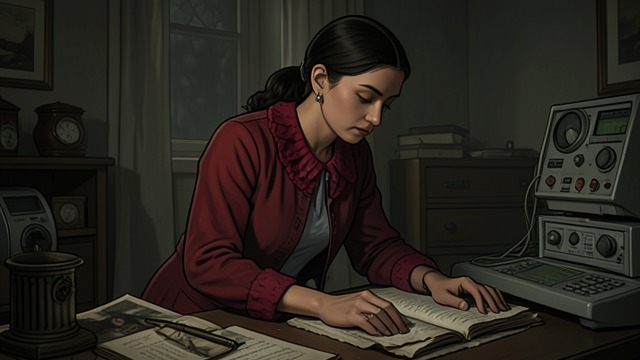
Blindness and Light
A changed sensory world
Marie-Laure loses sight but learns to build a world from sound, texture, smell, and memory.
A different kind of color
She imagines people and places in colors associated with voices, movement, and touch.
The novel presents perception as an active construction rather than a passive copy of the visible world.
Waves in the Air
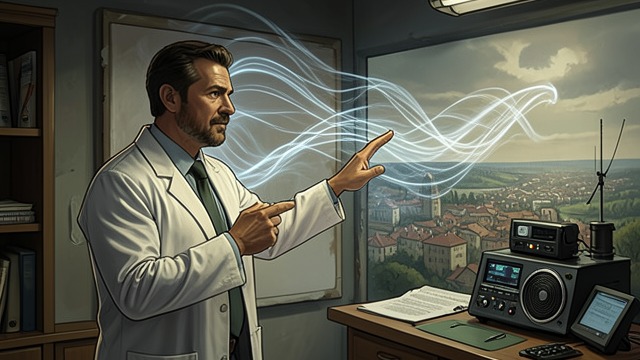
Waves in the Air
Invisible signals
Werner imagines radio waves moving through walls and over towns, carrying messages no eye can detect.
A wider reality
His technical curiosity suggests that the visible world is only one layer of what exists.
The same invisible medium later carries propaganda, resistance information, and Marie-Laure’s voice.
Etienne’s Ghost Signal
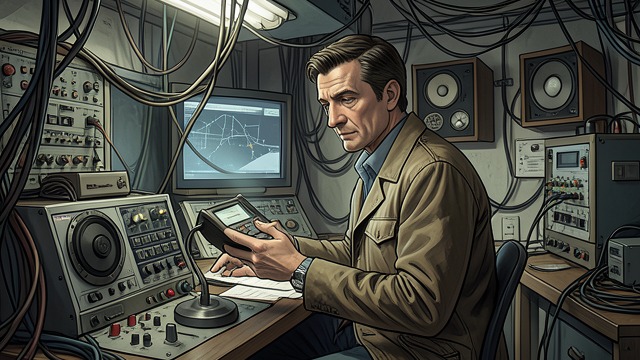
Etienne’s Ghost Signal
Broadcasting to Henri
Etienne sends his dead brother’s recordings and music through the transmitter, hoping to offer him comfort beyond death.
Unanswered transmission
Henri never responds, but the ritual gives Etienne a way to keep speaking to him.
The machine blurs the boundary between communication and mourning without proving that the dead can hear.
The Voice in Darkness
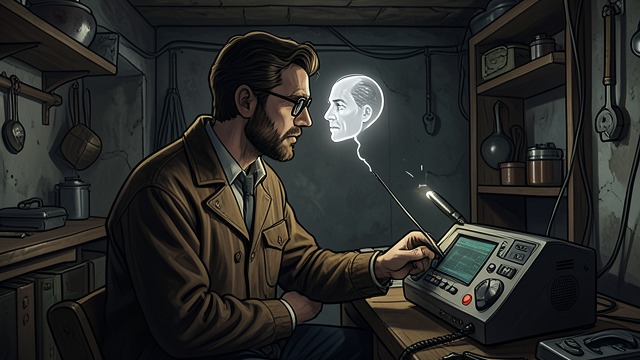
The Voice in Darkness
Reception under rubble
Werner’s radio brings Marie-Laure’s voice into a cellar where he can neither see nor hear normally.
A constructed connection
The signal becomes a living presence in his mind, giving him a specific person to imagine and a reason to act.
The scene makes the invisible world of radio emotionally concrete without making it supernatural.
The Air as Archive
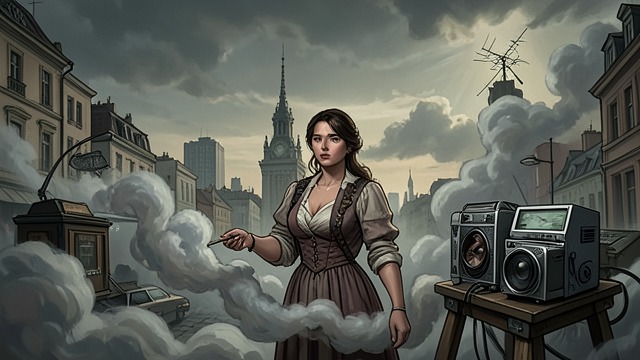
The Air as Archive
Modern signals
Marie-Laure imagines the dense currents of communication surrounding Paris, carrying countless messages through ordinary spaces.
Lives still reverberating
She considers whether memories and voices might persist in the air like signals, linking the living to those they have lost.
The novel ends by making the unseen world a figure for memory, not a claim that grief can be undone.
1934, after Marie-Laure loses her sight
Mid-1930s, as Werner studies radio
After the First World War, before the occupation
August 1944, during Werner’s entrapment
2014, during Marie-Laure’s walk in Paris
